Learn
Autosomal DNA explained
The test behind almost every consumer DNA kit. It reaches every branch of your tree, but only for about five or six generations — and knowing where that wall sits saves wasted effort.
Updated 2026-09-13 · 9 min read · Genealogy & education only
What autosomal DNA is
Humans carry 23 pairs of chromosomes. Twenty-two of those pairs are autosomes — everything except the sex chromosomes. Autosomal DNA testing reads hundreds of thousands of positions across those 22 pairs and compares them with everyone else in the company's database.
The appeal is coverage. Y-DNA follows one strictly paternal line; mitochondrial DNA follows one strictly maternal line. Autosomal DNA touches every branch of your tree at once — your father's mother's father's line included.
How it is inherited
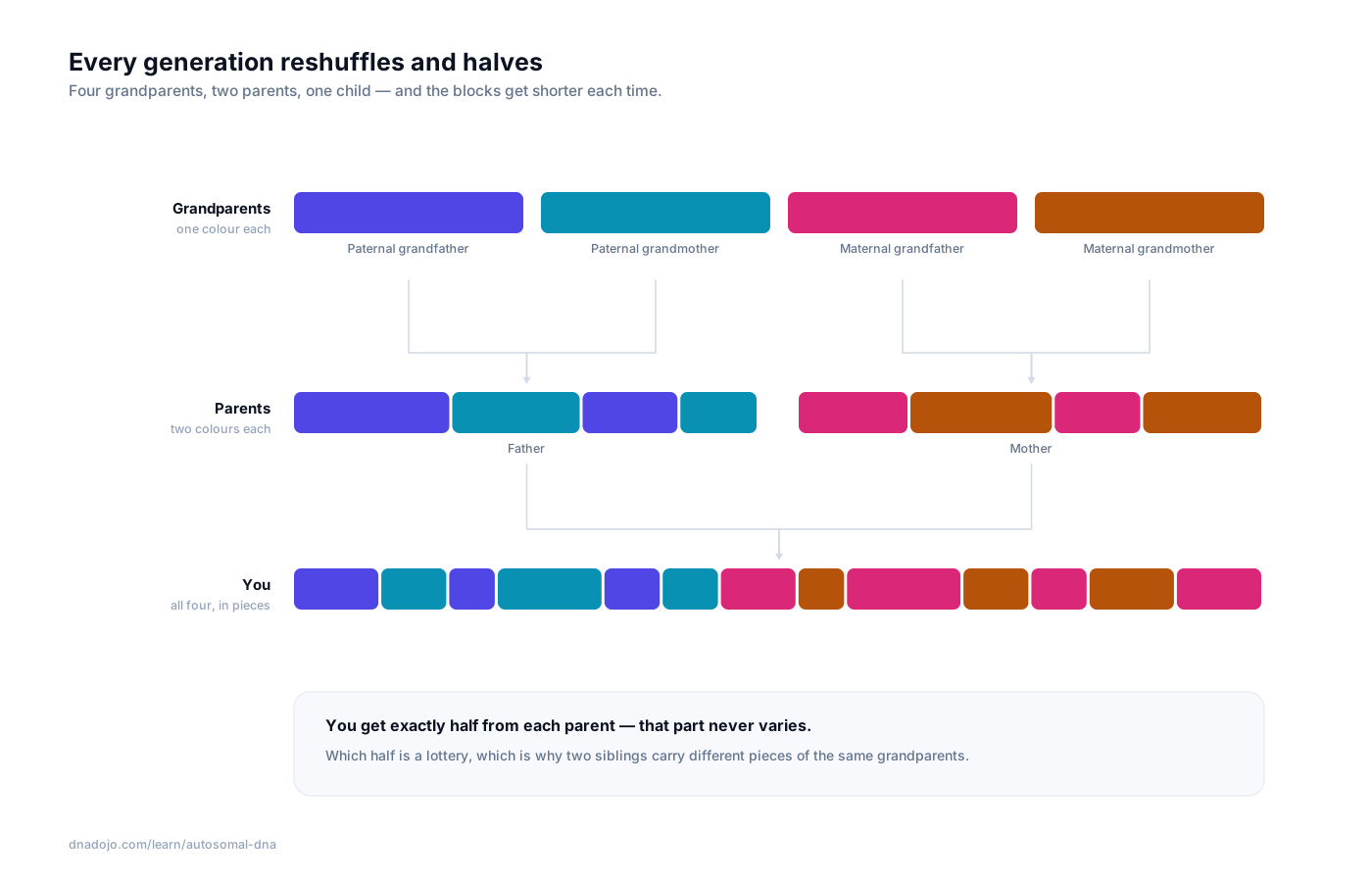
You get exactly half your autosomal DNA from each parent. That is the one number in genetic genealogy with no variation at all. Everything past that is a shuffle: each parent passes on a recombined mix of what they got from their parents, and which mix you receive is chance.
Why it fades
Halving compounds fast. Here is the ladder, with the amount you would expect from a single ancestor at each level and the range that is actually realistic.
| Generations back | Ancestor | Expected | Realistic cM | Can you carry none? |
|---|---|---|---|---|
| 1 | Parent | 50.00% | 3,485–3,485 | No |
| 2 | Grandparent | 25.00% | 1,080–2,405 | No |
| 3 | Great-grandparent | 12.50% | 366–1,411 | Rarely |
| 4 | 2nd great-grandparent | 6.25% | 122–828 | Rarely |
| 5 | 3rd great-grandparent | 3.13% | 35–501 | Yes |
| 6 | 4th great-grandparent | 1.56% | 9–305 | Yes |
| 7 | 5th great-grandparent | 0.781% | 2–185 | Yes |
Autosomal, Y-DNA and mitochondrial DNA
| Test | Follows | Useful depth | Best for |
|---|---|---|---|
| Autosomal | Every line | ~5–6 generations | Finding and placing cousins, unknown parentage work |
| Y-DNA | Direct paternal line only | Many generations | Surname studies, deep paternal ancestry |
| Mitochondrial | Direct maternal line only | Many generations | Deep maternal ancestry; rarely decisive for recent genealogy |
What autosomal DNA is good at
- Confirming or breaking a recent hypothesis. Within four generations it is decisive.
- Finding living cousins who hold photographs, letters and family memory you do not.
- Unknown parentage research, where a cluster of moderately close matches can reconstruct a tree.
- Detecting that a documented relationship is not the biological one — which deserves care and discretion, because it involves other people's lives.
What it cannot do
- It cannot tell you which specific ancestor a segment came from without other relatives to compare against.
- It cannot distinguish relationships that share the same expected amount — half sibling, grandparent and aunt/uncle all sit at roughly 25%.
- It cannot prove a connection beyond about six generations.
- It cannot, on this site, tell you anything about health. DNADojo does not do clinical interpretation.
Want to see where your own wall sits? The Inheritance Calculator walks up your tree generation by generation.