Free calculator
Cousin Calculator
Say how many generations each person sits below the ancestors they share, and get the exact cousin degree, the removal, the reasoning, and the DNA you would expect to share.
Count from the common ancestor
Deterministic · no AIHow the counting works
Every cousin relationship comes from two numbers: how far each person sits below the ancestors they have in common. The smaller number sets the degree — grandchildren of a shared couple are first cousins, great-grandchildren are second cousins — and the difference between the two numbers is the removal.
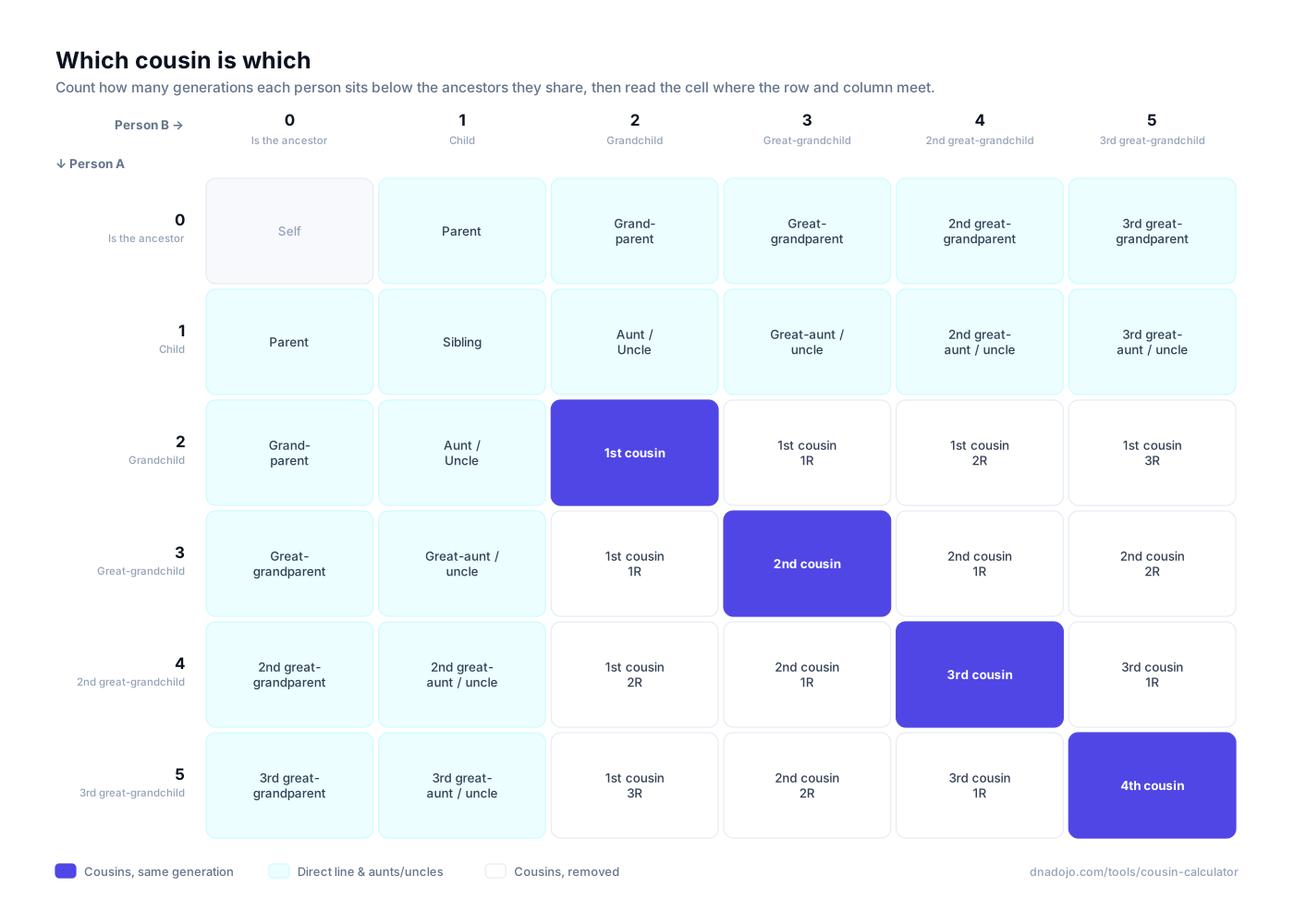
The three mistakes people make
- Counting from yourself instead of from the ancestor. The degree is set by the shared ancestor, not by how you happened to meet.
- Treating "removed" as "distant". A first cousin once removed shares about as much DNA as a great-aunt — that is close.
- Ignoring half lines. A half second cousin shares roughly half the DNA of a full second cousin, which is enough to push a match into a completely different shortlist.
Common questions
What does "once removed" actually mean?
"Removed" counts generations, not distance. Your first cousin once removed is either your first cousin's child or your parent's first cousin — one generation away from you in the family tree. It never means "distantly related".
Are second cousins and first cousins once removed the same thing?
No. Second cousins share great-grandparents and sit in the same generation. A first cousin once removed shares grandparents with one of you and great-grandparents with the other, so the two people sit one generation apart.
What makes a cousin a "half" cousin?
Half cousins descend from only one shared ancestor instead of an ancestral couple — for example, your parent and their parent were half siblings. Half cousins share roughly half the DNA of full cousins of the same degree.
Does this use my DNA?
No. This tool is pure genealogy arithmetic on the two numbers you enter. The expected DNA figures shown alongside the label come from the relationship dataset and are averages, not measurements of you.