Raw data
23andMe raw data, explained
The raw genotype download is a plain text file of SNP calls. Here is what each column means, which reference build it uses, and what it is and is not good for.
Updated 2026-09-13 · 7 min read · Genealogy & education only
What the download contains
A consumer raw genotype download is not your whole genome. It is a genotyping array result: a list of several hundred thousand specific positions that the testing chip was designed to read, together with the two letters found at each one.
It is a plain text file, usually tab-separated, often shipped inside a zip archive, and typically somewhere between 5 MB and 25 MB once unzipped.
Getting the file
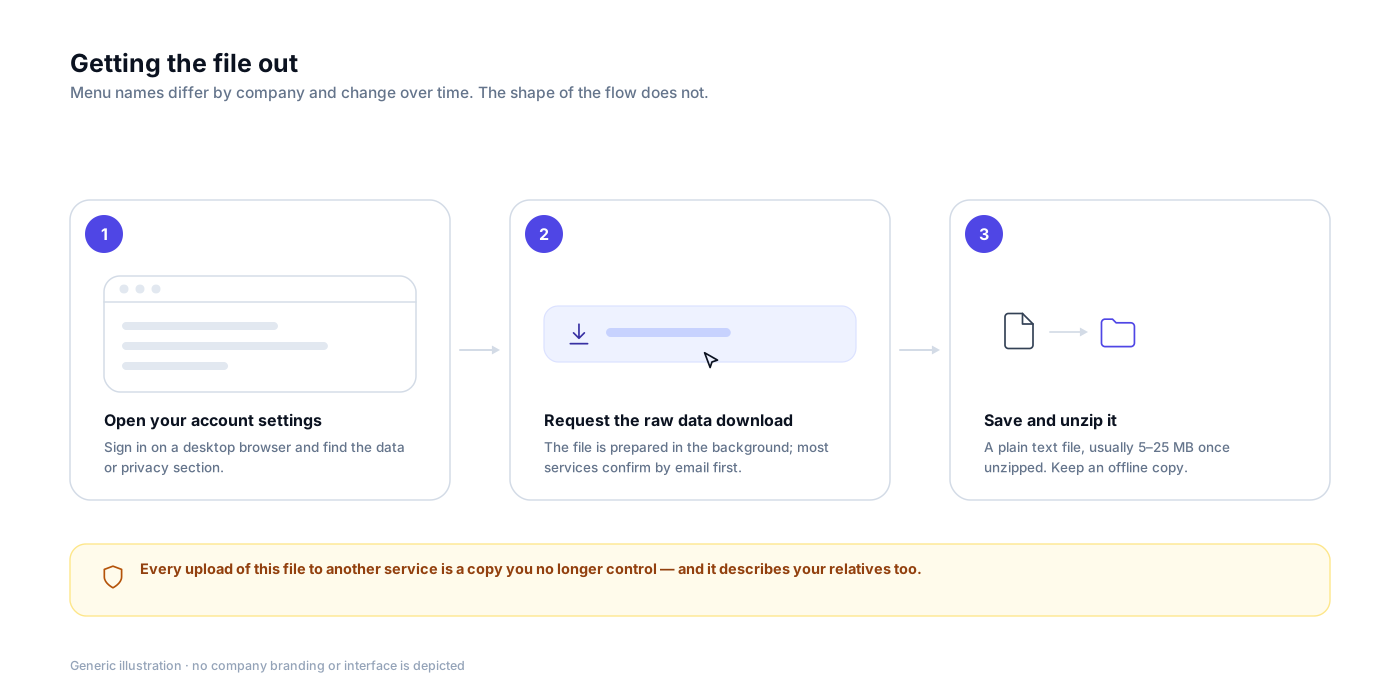
- Sign in to your testing account on a desktop browser.
- Look in the account, profile or settings area for a data or download section.
- Request the raw genotype data download. It is usually prepared in the background and emailed or made available for a limited time.
- Save the file somewhere you control, and unzip it if needed.
Testing companies redesign their account pages regularly, so the exact menu names change. The download itself has been stable for years.
Reading the format
The file starts with comment lines beginning with # — metadata about the reference
build, the array version and terms of use. After that comes a header row and then one line per SNP.
# This data file generated by a consumer testing service
# Build: GRCh37
rsid	chromosome	position	genotype
rs4477212	1	82154	AA
rs3094315	1	752566	AG
rs3131972	1	752721	GG
i713426 1 787173 --| Column | Meaning | Notes |
|---|---|---|
rsid | Reference SNP identifier | Entries starting with i are internal chip identifiers with no public rsID |
chromosome | 1–22, X, Y or MT | Y and MT lines exist but say nothing about autosomal matching |
position | Base-pair coordinate | Only meaningful together with the build |
genotype | One or two letters | -- means no call; single letters appear on X, Y and MT |
Which reference build
Positions are only meaningful relative to a reference build. GRCh37 (also called hg19) and GRCh38 (hg38) number the same physical locations differently. Mixing coordinates from two builds silently produces wrong answers, which is why the Local DNA Explorer detects and displays the build but does not attempt to convert between them.
What to do with it
- Open it locally to see what you actually have — SNP count, chromosome coverage, no-call rate.
- Upload it to another genealogy service if you want more matches, having read that service's privacy policy carefully first.
- Keep an offline backup so you still have your data if an account is closed or a company changes hands.
What to be careful about
- Every upload is a copy you no longer control. Deleting an account does not necessarily delete every copy.
- Your relatives did not consent. Your genotype reveals information about parents, siblings and children who never took a test.
- Health interpretation services vary wildly in quality. Array data was not designed for clinical use.
- Companies change ownership. The privacy policy you agreed to is not guaranteed to be the one that applies later.