Raw data
AncestryDNA raw data, explained
AncestryDNA's raw export splits the genotype into two allele columns instead of one. Here is what that means, how to read the file, and what you can safely do with it.
Updated 2026-09-13 · 7 min read · Genealogy & education only
What the download contains
Like every consumer autosomal export, this is a genotyping array result: a few hundred thousand chosen positions and the letters observed at each. It is a tab-separated text file, delivered in a zip archive, with a block of comment lines at the top.
Getting the file
- Sign in on a desktop browser and open your DNA settings.
- Find the option to download raw DNA data.
- Confirm by email — the service will send a confirmation link before the file is prepared.
- Download the zip within the window it stays available, and unzip it.
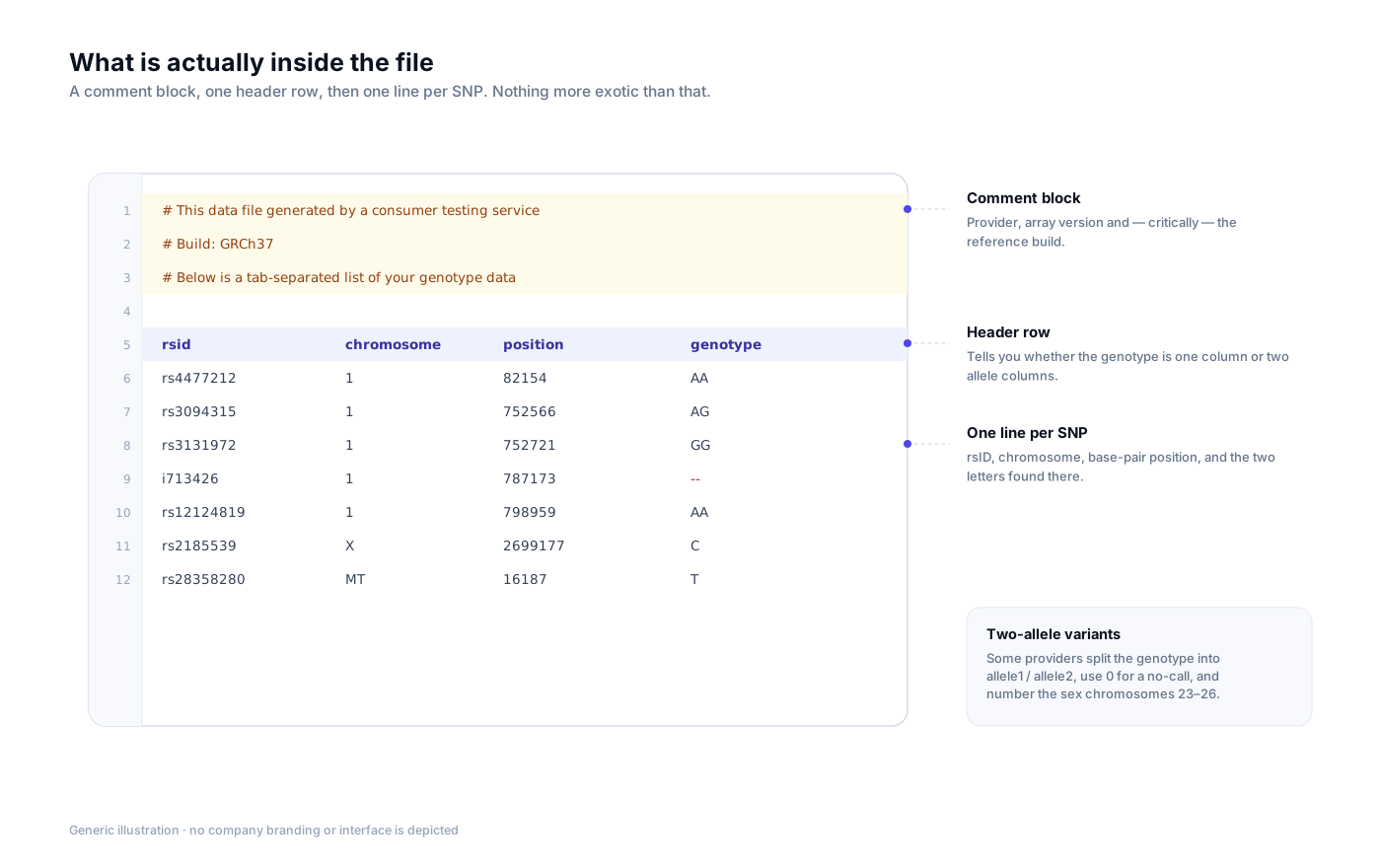
The four-allele layout
The notable difference from other exports is that the genotype is split across two columns,
allele1 and allele2, rather than being a single two-letter string.
#AncestryDNA raw data download
#Array: ...  Build: 37
rsid	chromosome	position	allele1	allele2
rs4477212	1	82154	A	A
rs3094315	1	752566	A	G
rs3131972	1	752721	G	G
rs12124819 1 776546 0 0| Column | Meaning | Notes |
|---|---|---|
rsid | Reference SNP identifier | Generally standard rsIDs |
chromosome | Numeric code | 23 means X, 24 Y, 25 the pseudoautosomal region, 26 mitochondrial |
position | Base-pair coordinate | Read the build from the header comments |
allele1 / allele2 | The two observed letters | 0 means no call — the equivalent of -- elsewhere |
How it differs from other exports
| Aspect | Two-column style | Single-genotype style |
|---|---|---|
| Genotype | Two separate allele columns | One combined string, e.g. AG |
| No call | 0 | -- |
| Sex chromosomes | Numeric codes 23–26 | Letters X, Y, MT |
| Header | Comment block plus a header row | Comment block plus a header row |
What to do with it
- Inspect it locally to confirm what you actually received.
- Keep an offline backup independent of any account.
- Upload it elsewhere only after reading that service's data retention, sharing and law-enforcement policies.
What to be careful about
- Numeric chromosome codes are the single most common source of bugs in home-made scripts.
- A file with an unexpectedly low SNP count may be a partial download — check before uploading it anywhere.
- Your file describes your relatives as well as you. Treat sharing it as a decision that affects other people.
Ready to look inside? Open the Local DNA Explorer — your file is read on your device and never uploaded.