Relationship guide
Great-grandparent DNA: expected share versus what you actually inherit
How much autosomal DNA may come from a great-grandparent, why the amount varies, and why family descent is larger than a percentage.
Updated 2026-09-13 · 6 min read · Genealogy & education only
Expected does not mean guaranteed
Each generation passes on a shuffled half of its autosomal DNA. By the time a great-grandparent’s DNA reaches you, several shuffles have happened. The expected value is useful for orientation, but no individual chromosome follows the average.
Some great-grandparents leave more long segments than others. That is normal and does not make one ancestral line more important than another.
DNA inheritance and family descent are different records
A great-grandparent remains a great-grandparent whether you inherited 10%, 13%, or no easily identifiable segment from a particular branch. DNA is one kind of evidence; documentary genealogy is another.
The inheritance calculator is useful for visualising the expectation, but it should not be used to judge the reality of a documented relationship.
What else could fit?
| Possibility | Why it can look similar | What to check |
|---|---|---|
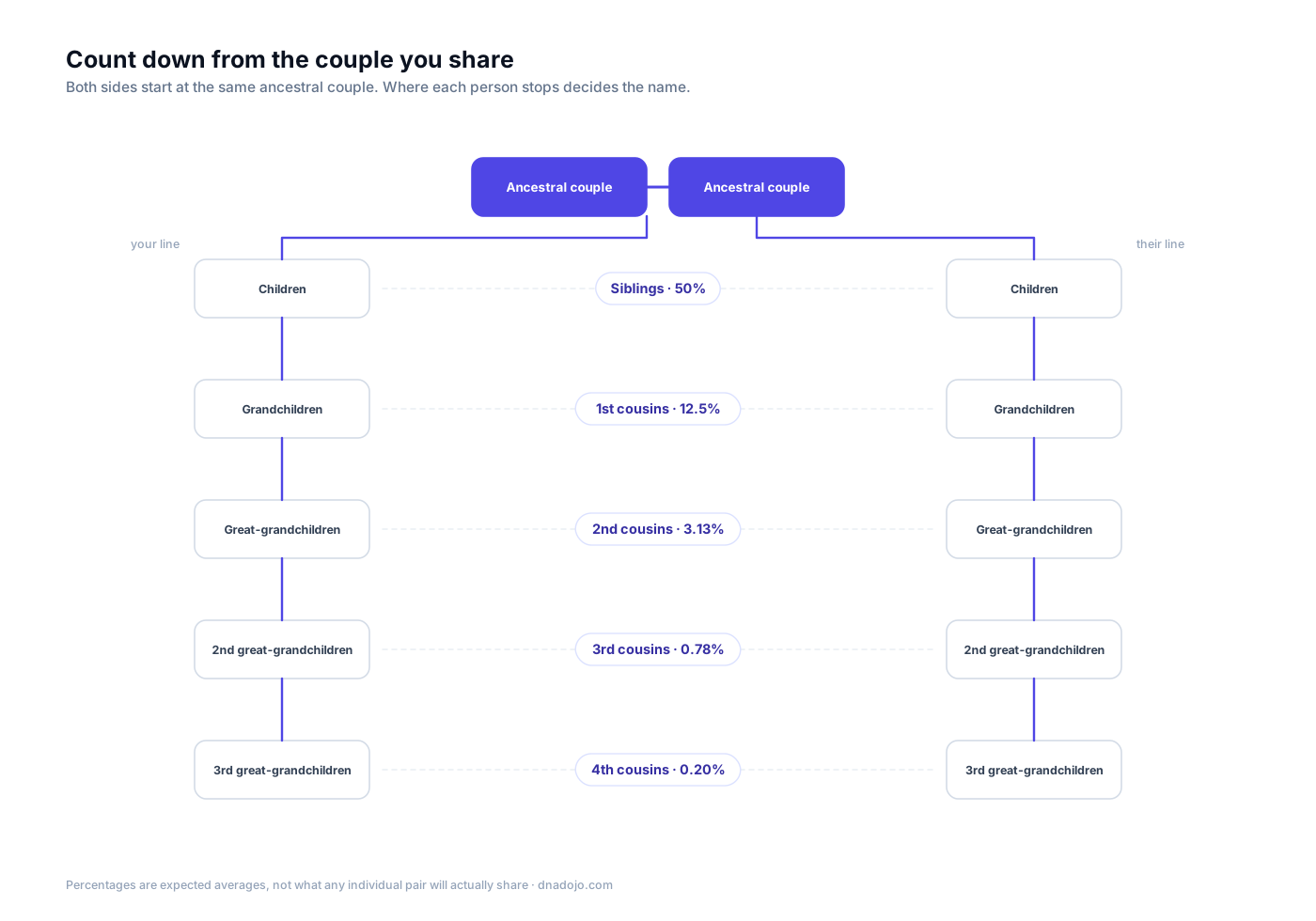
| First cousin | A cousin may share a similar percentage through a different path. | Great-grandparents are direct ancestors; cousins are collateral relatives. |
| Great-aunt or uncle | Similar number of inheritance steps can overlap. | One is an ancestor’s sibling, not an ancestor. |
| Distant ancestor | More generations increase chance of no detectable DNA. | Count meioses and use records. |
What to do next
- Use an inheritance calculator for the expected share.
- Keep the distinction between genetic inheritance and family descent visible.
- Use tested relatives to place segments when the research question needs it.
Questions people ask
What percentage of DNA comes from a great-grandparent?
About 12.5% is the average expectation.
Do you inherit DNA from every great-grandparent?
You usually inherit a substantial amount at this distance, but exact segments vary.
Does less DNA mean less related?
No. The genealogical relationship remains the same.
Published September 14, 2026 · Reviewed against DNADojo dataset v1.0.0-simulated · Sources and limitations