Free calculator
Expected cM Range
The reverse lookup: choose a relationship and see its typical shared cM, its full range, and the relationships it is most often confused with.
Look up a relationship
Versioned datasetOverlap is the rule, not the exception
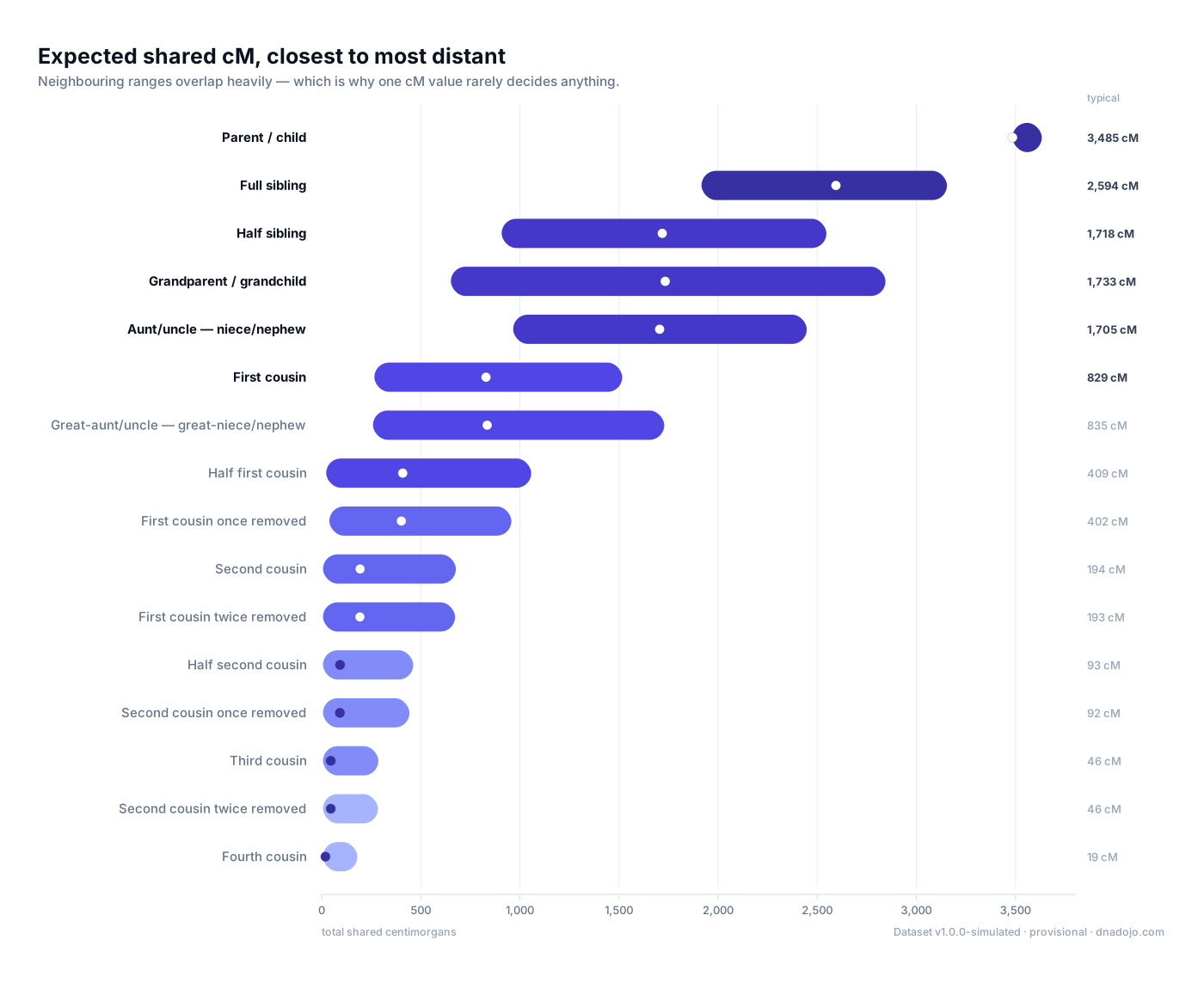
Ranges for neighbouring relationships overlap almost completely. That is not a flaw in the data; it is the biology. Shared DNA is the outcome of a few dozen random recombination events, and a few dozen random events do not produce tidy boundaries.
Using a range properly
- Rule out, don't rule in. Ranges are best at eliminating relationships, not confirming one.
- Note the width. A wide range means the relationship is a weak inference from cM alone.
- Check the version. Every figure on this page carries a dataset version so a result you saved last year can be traced to the numbers it was based on.
Common questions
Which number should I compare against — typical or range?
Both. The typical value tells you where the relationship sits; the range tells you how much room it has. A relationship whose range is 400 cM wide is a weak piece of evidence on its own, however close your value is to the middle of it.
Why is the low end sometimes zero?
Past about third cousin, two genuinely related people can share no detectable autosomal DNA. Showing a floor of zero is more honest than showing a small positive number that implies a guarantee.
Do these ranges apply to endogamous populations?
No. In communities with long histories of intermarriage, people are related through many paths at once, and shared cM runs well above these ranges for the same stated relationship. Treat published ranges as a lower bound in that situation.