Match research
200 cM shared DNA: turn a cousin-range result into a lead
How to use a 200 cM DNA match to build a cousin hypothesis, identify a shared-match cluster, and keep uncertainty visible.
Updated 2026-09-13 · 6 min read · Genealogy & education only
Cousin labels come after the cluster
At 200 cM, it is tempting to ask for a single cousin number. The DNA cannot usually give one. It can, however, give you a very good reason to investigate a group of matches that may all trace to the same ancestral couple.
Start with the shared-match list. Note any repeated towns, surnames, or tree branches, but treat them as leads rather than conclusions. The goal is to form a cluster with more than one independent connection.
Why paper records still matter
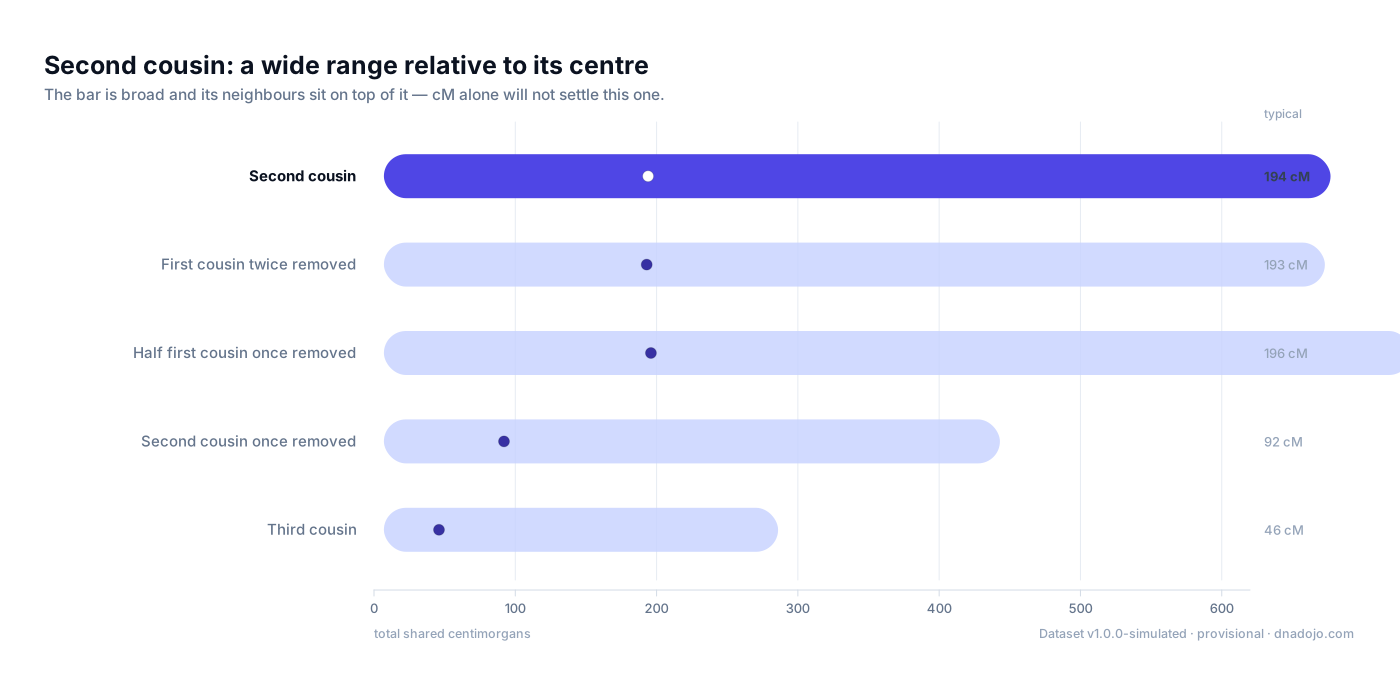
A range chart can tell you that several paths are biologically plausible. It cannot tell you which birth, marriage, migration, or name change created the connection. That is where documents carry the work.
The best outcome is a tree path supported by both evidence types: the match cluster points to the branch, and records explain the human connection.
What else could fit?
| Possibility | Why it can look similar | What to check |
|---|---|---|
| Second cousin | The central range often sits near this number. | Shared great-grandparent couple. |
| First cousin twice removed | A different generational path can overlap. | Two-generation age difference. |
| Half first cousin once removed | A half line reduces the expected share. | Known half relationship in a preceding generation. |
What to do next
- Tag every shared match that has a public tree or a known relative.
- Identify the smallest ancestral couple that explains the whole cluster.
- Use the cousin calculator once the candidate tree positions are visible.
Questions people ask
Is 200 cM enough to work with?
Yes. It can be very useful when it belongs to a coherent shared-match cluster.
What is the most likely relationship?
There is no safe single answer without age, tree, and shared-match evidence.
Can a public tree be wrong?
Yes. Treat every online tree as a source to verify, not as proof.
Published September 14, 2026 · Reviewed against DNADojo dataset v1.0.0-simulated · Sources and limitations