What it means
Second cousins share a set of great-grandparents. Your second cousins are the grandchildren of your grandparents' siblings.
They sit in the same generation as you, which is what distinguishes them from a first cousin once or twice removed even though the DNA amounts overlap.
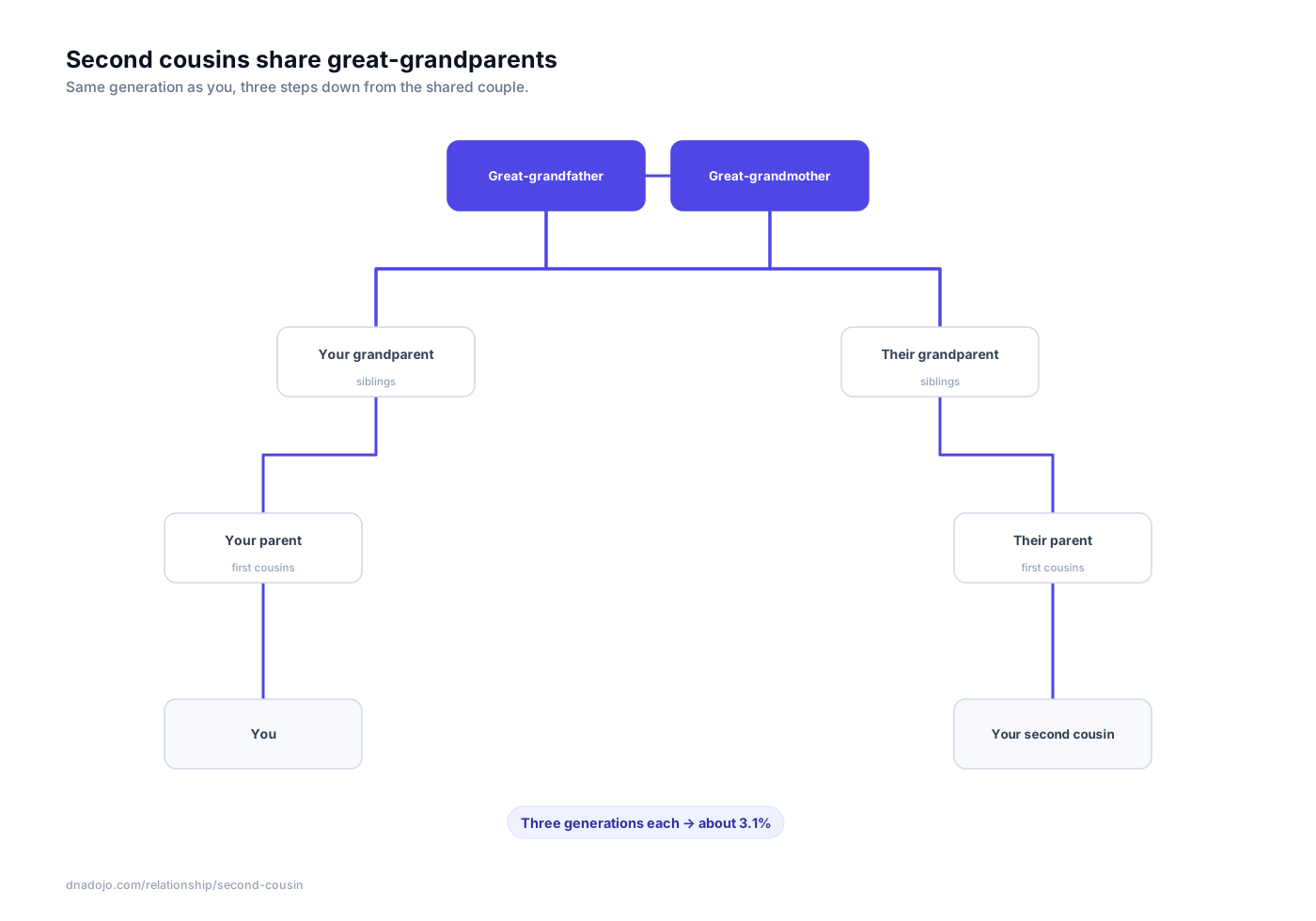
The path through the tree
- Start at the shared great-grandparents.
- Down one generation: their children, who are siblings.
- Down again: your grandparent and your cousin's grandparent — that is the first cousin layer.
- Down twice more to reach you and your second cousin. Three generations each.
How much DNA is shared
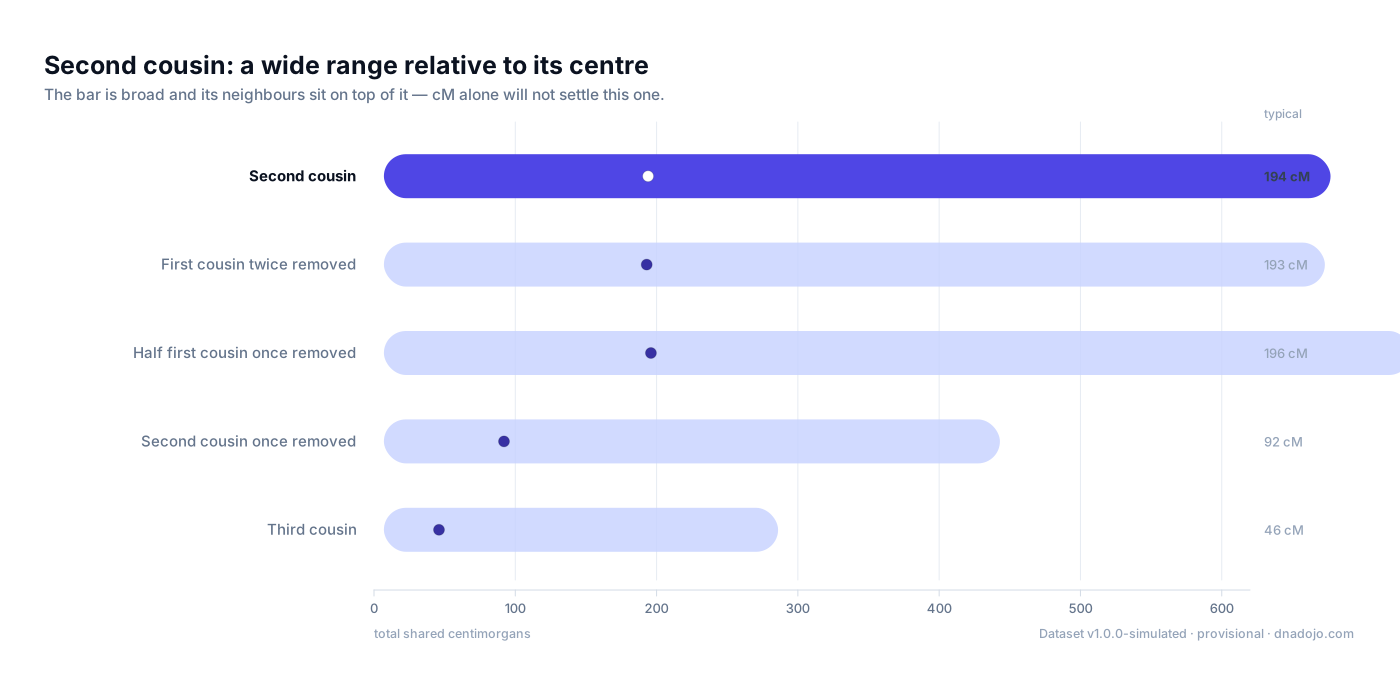
The expected share is 3.13%, which works out to around 194 cM. In practice the value lands somewhere in 7–677 cM.
Is your number consistent with second cousin?
Runs in your browser against dataset record second_cousin. Nothing is sent anywhere.
What it gets confused with
| Relationship | Why it overlaps | What breaks the tie |
|---|---|---|
| First cousin twice removed | Identical expected sharing — both sit at the same number of meioses. | Generation gap. Ages and tree position, not DNA, decide this one. |
| Half first cousin once removed | Same expected value again. | Look for a known half line in the tree; if there is none, this drops off the list. |
| Second cousin once removed | Ranges overlap heavily at the low end of 2C. | Age difference of roughly one generation. |
| Third cousin | A weak second cousin and a strong third cousin look the same. | Longest segment, and how far back the shared surnames appear. |
By the numbers alone, these relationships in the dataset have ranges that overlap second cousin:
- First cousin twice removed — 7–673 cM
- Half first cousin once removed — 7–734 cM
- 3rd great-grandparent / 3rd great-grandchild — 7–753 cM
- Half second cousin — 7–462 cM
- First cousin three times removed — 7–442 cM
- Second cousin once removed — 7–443 cM
Evidence that settles it
- Build out the shared-match cluster: second cousins usually sit in a cluster of other descendants of the same great-grandparents.
- Compare longest segment rather than total — a low total with one long segment behaves more like a close relationship.
- Test an older relative if you can. A grandparent's result turns your second cousin into their first cousin once removed, which is much easier to read.
- Check for endogamy before trusting a high total.
Questions
Can second cousins share no DNA at all?
It is very unlikely but not impossible. Essentially every pair of second cousins shares something detectable. The genuine risk of sharing nothing starts at third and fourth cousins.
Why does my second cousin share more than my first cousin once removed?
Because the ranges overlap. Expected values are averages across many pairs; any individual pair lands wherever recombination put it.
Is a second cousin close enough to help with unknown parentage research?
Yes, often. A second cousin narrows the search to one set of great-grandparents, which is a workable starting point when combined with shared matches and documents.