Match research
700 cM shared DNA: could it be a first cousin?
How to assess a 700 cM match without mistaking a plausible first-cousin result for a certainty.
Updated 2026-09-13 · 6 min read · Genealogy & education only
Why first cousin is a sensible starting point
First cousins share both grandparents, so their totals commonly sit in this part of the chart. If the person is around your age and matches descendants of both of those grandparents, the hypothesis becomes stronger quickly.
But a close genetic match does not know what generation it belongs to. A great-aunt can share a similar amount. So can a half aunt or uncle. Let age and the pattern of known relatives do the sorting.
Do not make the tree fit the number
It is easy to see 700 cM, choose first cousin, and then reshape the family tree to suit. Work in the other direction. Make a shortlist, compare it to what is actually known, and flag the places where the records disagree.
If the evidence points toward an unexpected close relationship, take extra care with privacy and timing. The match data can wait while you verify the facts.
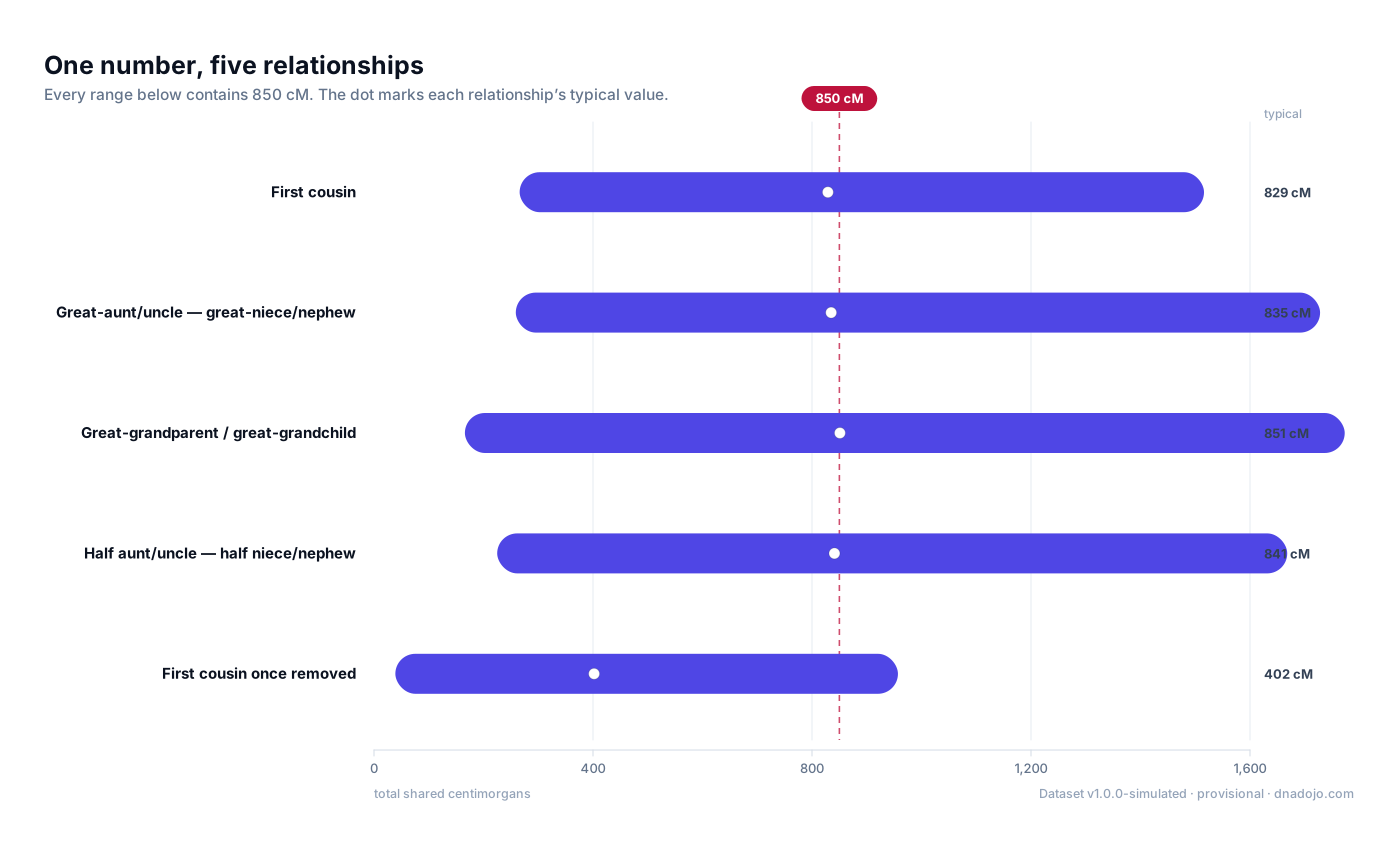
What else could fit?
| Possibility | Why it can look similar | What to check |
|---|---|---|
| First cousin | A normal first-cousin result can land here. | Same generation and shared grandparents. |
| Great-aunt or uncle | One generation up can overlap the first-cousin range. | Age gap and parent’s shared matches. |
| Half aunt or uncle | One shared grandparent can produce a similar total. | Known half relationship in the prior generation. |
What to do next
- Compare age ranges before opening a large family tree.
- Check whether the match shares known relatives from one or both grandparent lines.
- Use a cousin calculator to test the tree paths that remain.
Questions people ask
Is 700 cM normal for first cousins?
Yes. First cousins have a broad range of observed totals.
Can 700 cM be an aunt?
A great-aunt or half aunt can overlap this total; age and match pattern matter.
What proves the relationship?
A combination of documented tree connections, shared matches, and where needed additional tested relatives.
Published September 14, 2026 · Reviewed against DNADojo dataset v1.0.0-simulated · Sources and limitations