What it means
Two people are first cousins when they share a set of grandparents but not a parent. Your first cousins are the children of your aunts and uncles.
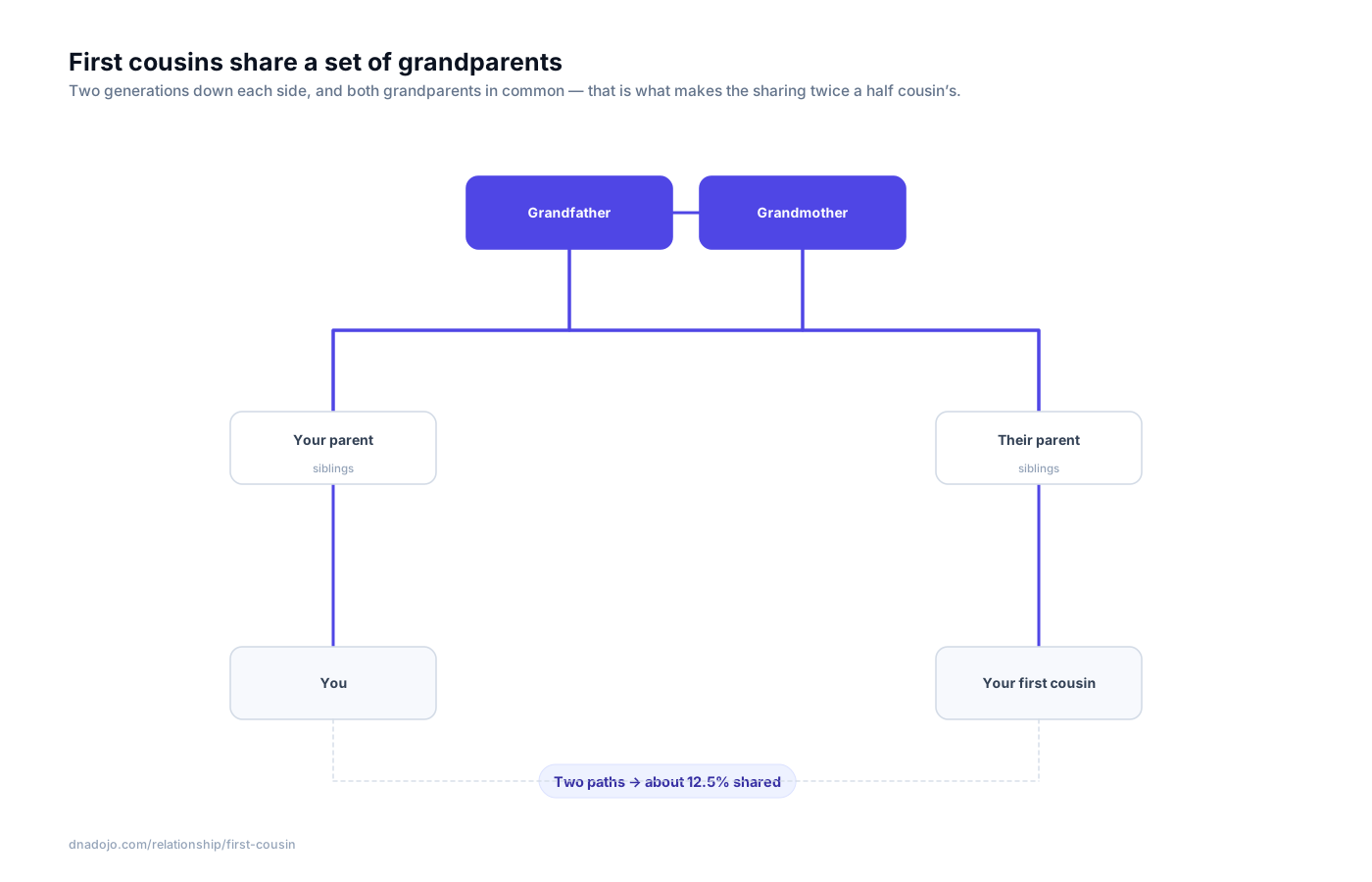
Because both grandparents are shared, first cousins are connected by two independent paths through the family tree, which is what puts them at roughly twice the expected sharing of half first cousins.
The path through the tree
- Start at the shared grandparents.
- Go down one generation to their children — your parent and your cousin's parent, who are siblings.
- Go down one more generation to reach you and your cousin. Two generations each, no removal.
How much DNA is shared
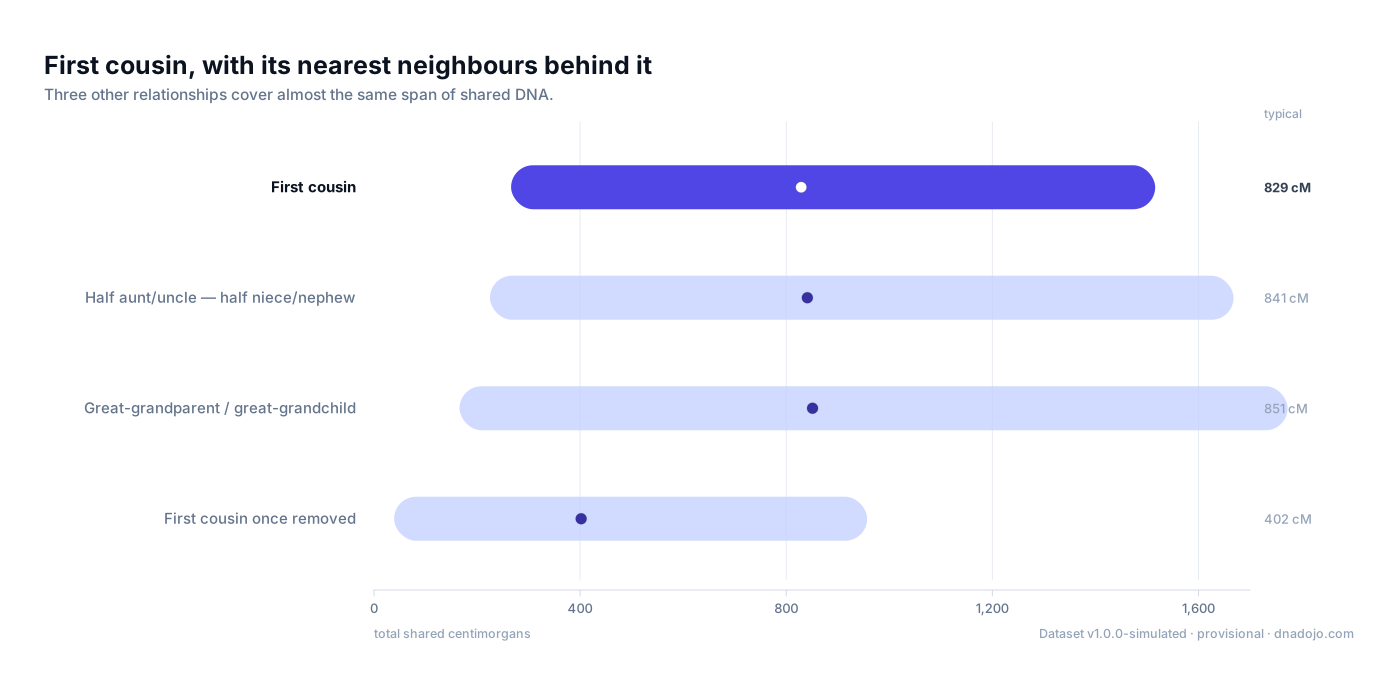
The expected share is 12.5%, which works out to around 829 cM. In practice the value lands somewhere in 266–1,516 cM.
Is your number consistent with first cousin?
Runs in your browser against dataset record first_cousin. Nothing is sent anywhere.
What it gets confused with
| Relationship | Why it overlaps | What breaks the tie |
|---|---|---|
| Half aunt or half uncle | The expected sharing is close enough that cM alone will not separate them. | Age gap. A half aunt is usually a generation older, even if the gap is small. |
| Great-grandparent or great-grandchild | Sits at the same expected percentage on a direct line. | Age makes this one obvious in practice, which is why the generation filter matters. |
| Great-aunt or great-uncle | Overlapping range, different generation. | Check who their siblings match and how old everyone is. |
| First cousin once removed | The upper half of 1C1R's range overlaps the lower half of a first cousin's. | Generation. A 1C1R is your cousin's child or your parent's cousin. |
By the numbers alone, these relationships in the dataset have ranges that overlap first cousin:
- Great-aunt/uncle — great-niece/nephew — 259–1,728 cM
- Half aunt/uncle — half niece/nephew — 225–1,668 cM
- Great-grandparent / great-grandchild — 166–1,773 cM
- 2nd great-grandparent / 2nd great-grandchild — 7–1,196 cM
- Half great-aunt/uncle — half great-niece/nephew — 25–1,074 cM
- Half first cousin — 23–1,057 cM
Evidence that settles it
- Compare ages: first cousins are usually within a generation of each other.
- Check shared matches: a true first cousin should share your aunts, uncles and grandparents' other descendants.
- Look at the longest segment: first cousins normally have at least one very long segment.
- If a parent has tested, check which side the match falls on — that alone halves the shortlist.
Questions
Can first cousins share as little as 400 cM?
Yes. The lower tail of the first-cousin distribution reaches down into territory that overlaps first cousin once removed and half first cousin. It is uncommon but entirely normal.
Do first cousins always show up as "1st cousin" on testing sites?
No. Companies label a predicted relationship band, not a certainty, and they often show ranges like "1st cousin – 2nd cousin". Treat the label as a hint and the cM value as the data.
What about double first cousins?
When two siblings from one family marry two siblings from another, their children are double first cousins and share roughly twice the usual amount — around the level of half siblings. If your cM is far above the first-cousin range, check for this before assuming a closer relationship.