Relationship guide
Third cousins: related on paper, variable in DNA
How third cousins connect, why their DNA totals vary widely, and why a real third cousin may not match at all.
Updated 2026-09-13 · 6 min read · Genealogy & education only
The relationship is a tree fact
Third cousins are descendants of siblings in the generation of your great-great-grandparents. The paper relationship is unambiguous once the tree is documented, even if the DNA result is faint or missing.
Several recombination events sit between third cousins and their common ancestors. Each one can break up or lose segments. That is why a range table should never be used as a test of whether a documented distant cousin “counts.”
What makes a third-cousin match useful
A third-cousin-sized match is most useful in a group. One match can be ambiguous. A cluster of matches with trees pointing to the same ancestral couple can confirm a branch worth researching.
Older relatives are powerful here. They are one generation closer to the common ancestors and may retain segments you did not inherit.
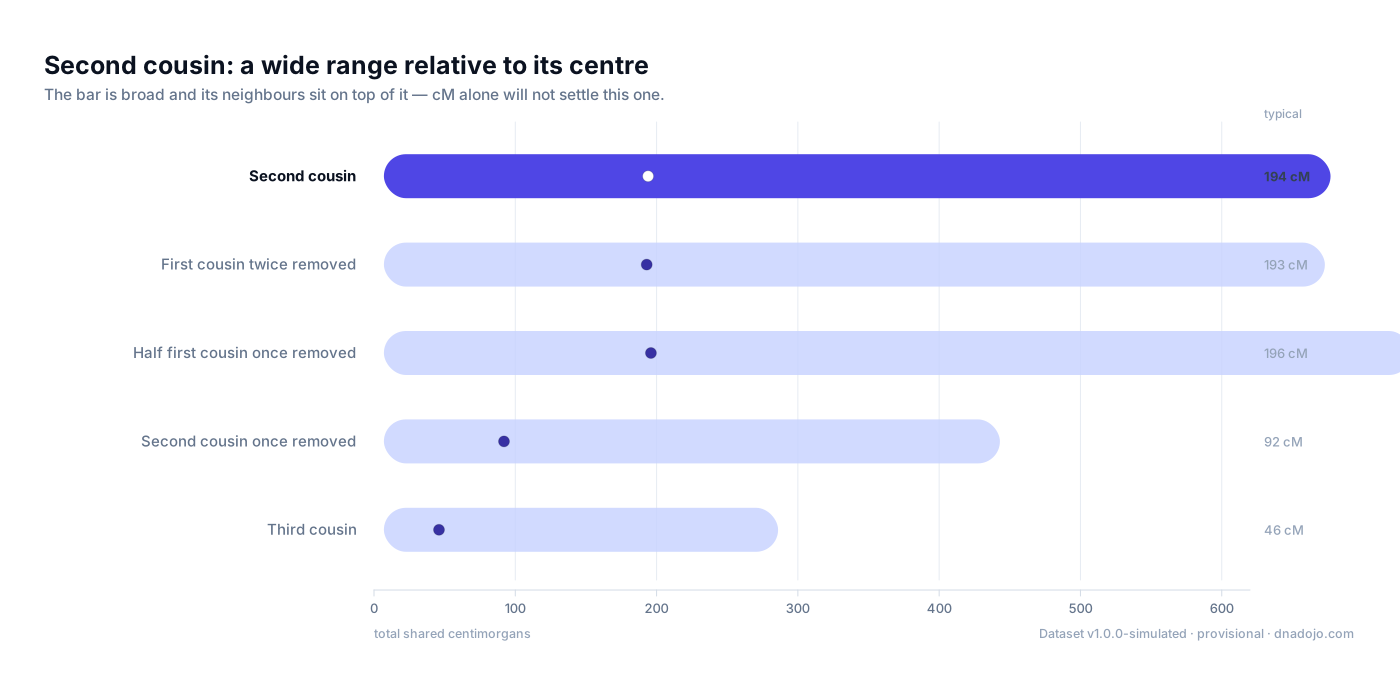
What else could fit?
| Possibility | Why it can look similar | What to check |
|---|---|---|
| Second cousin once removed | A lower result can overlap third-cousin totals. | Count generations to the shared ancestors. |
| Fourth cousin | A strong fourth cousin can look similar. | Look for the oldest shared ancestral couple. |
| No detectable match | Distant cousins may inherit none of the same segments. | Use the documented tree and other relatives. |
What to do next
- Use shared matches to find a repeated ancestral couple.
- Compare trees for a documented path before assigning a cousin degree.
- Test or consult an older relative if the evidence is thin.
Questions people ask
Do third cousins always share DNA?
No. A genuine third-cousin relationship can leave no detectable autosomal DNA.
Who are my third cousins?
They share your second-great-grandparents.
Can a 90 cM match be a third cousin?
It can, but other relationships can also produce that total.
Published September 14, 2026 · Reviewed against DNADojo dataset v1.0.0-simulated · Sources and limitations