Match research
1,000 cM shared DNA: use a checklist, not a guess
A practical evidence checklist for interpreting a 1,000 cM DNA match among several close family possibilities.
Updated 2026-09-13 · 6 min read · Genealogy & education only
A close match deserves a slower workflow
The closer a match is, the more tempting it is to make a quick conclusion. That is exactly when it helps to slow down. Close relationships can overlap, and an incorrect story can have real consequences for living people.
Start with the information least likely to change: total cM, age, public tree details, and shared matches. Save notes privately. Then identify which questions would actually eliminate a candidate rather than merely make one feel more familiar.
A parent’s result changes the scale of the problem
When a parent is willing to test, their match list can show which side carries the connection. A first cousin to you becomes a cousin-once-removed to a parent; an aunt or uncle becomes a sibling. Those patterns are easier to recognise.
If testing another person is not an option, build the shared-match cluster instead. It takes longer, but a set of independent matches can still establish the ancestral branch.
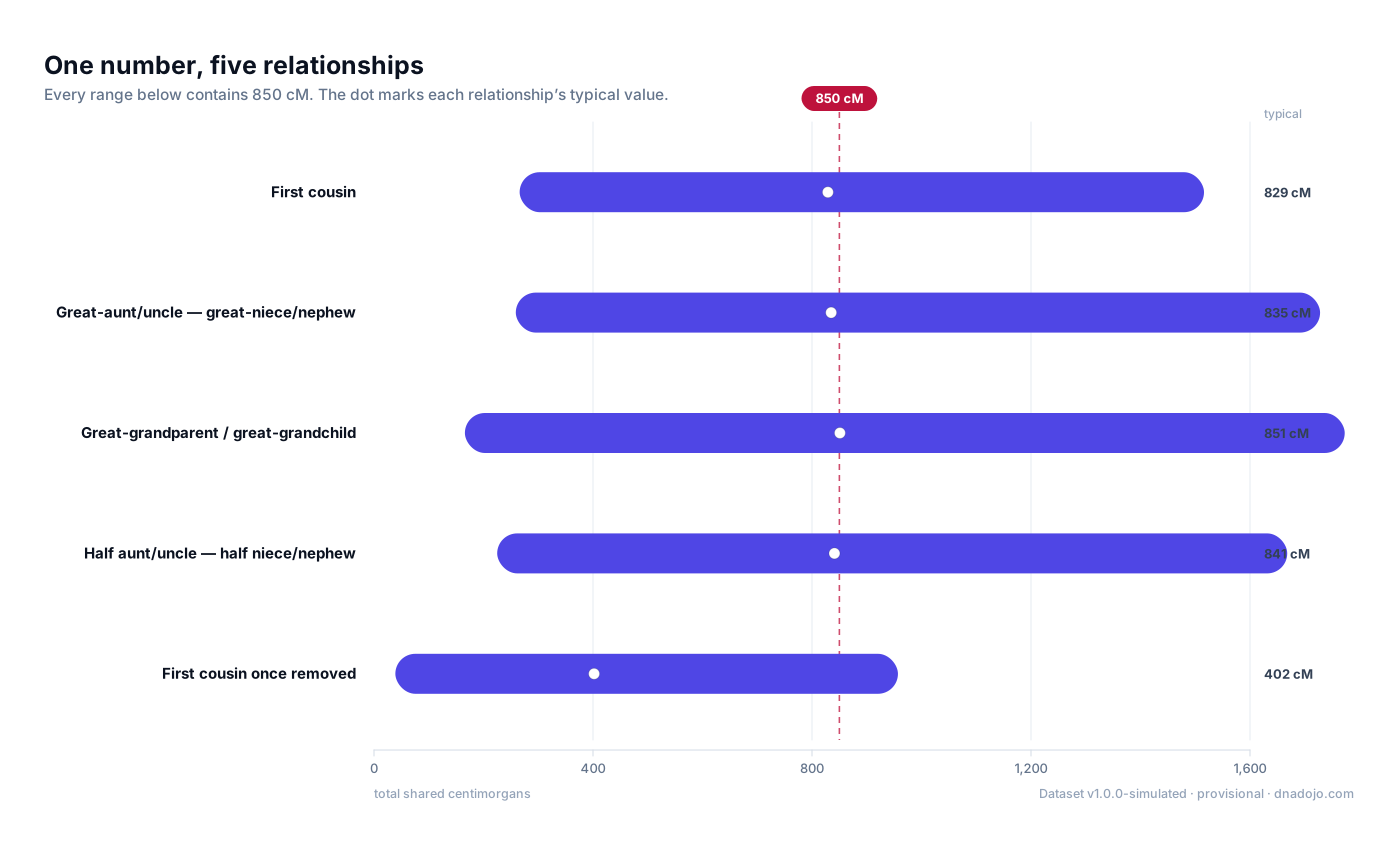
What else could fit?
| Possibility | Why it can look similar | What to check |
|---|---|---|
| First cousin | A high result can be around this total. | Same generation and grandparent cluster. |
| Half sibling | A lower half-sibling result can overlap it. | Fully identical regions and same-generation context. |
| Aunt or uncle | An avuncular result can also overlap. | Age and parent’s match pattern. |
What to do next
- Write down the six evidence points before researching names.
- Ask only questions that can rule out a relationship, such as generation or known side.
- Contact the match only when you can state what is known and what remains uncertain.
Questions people ask
Is 1,000 cM a close relative?
Yes, it is generally close family, but several relationships may fit.
Should I test a parent?
If they are willing and informed, a parent’s result can be especially clarifying.
Can shared matches settle it?
They often locate the branch, though records and other evidence may still be needed for the exact label.
Published September 14, 2026 · Reviewed against DNADojo dataset v1.0.0-simulated · Sources and limitations