What it means
Half siblings share exactly one biological parent. Full siblings share both.
Sharing one parent instead of two halves the expected DNA: roughly a quarter rather than a half.
For many people this page is not an abstract question. Discovering a half sibling through a test can be significant news for several families at once, and it is worth slowing down before acting on it.
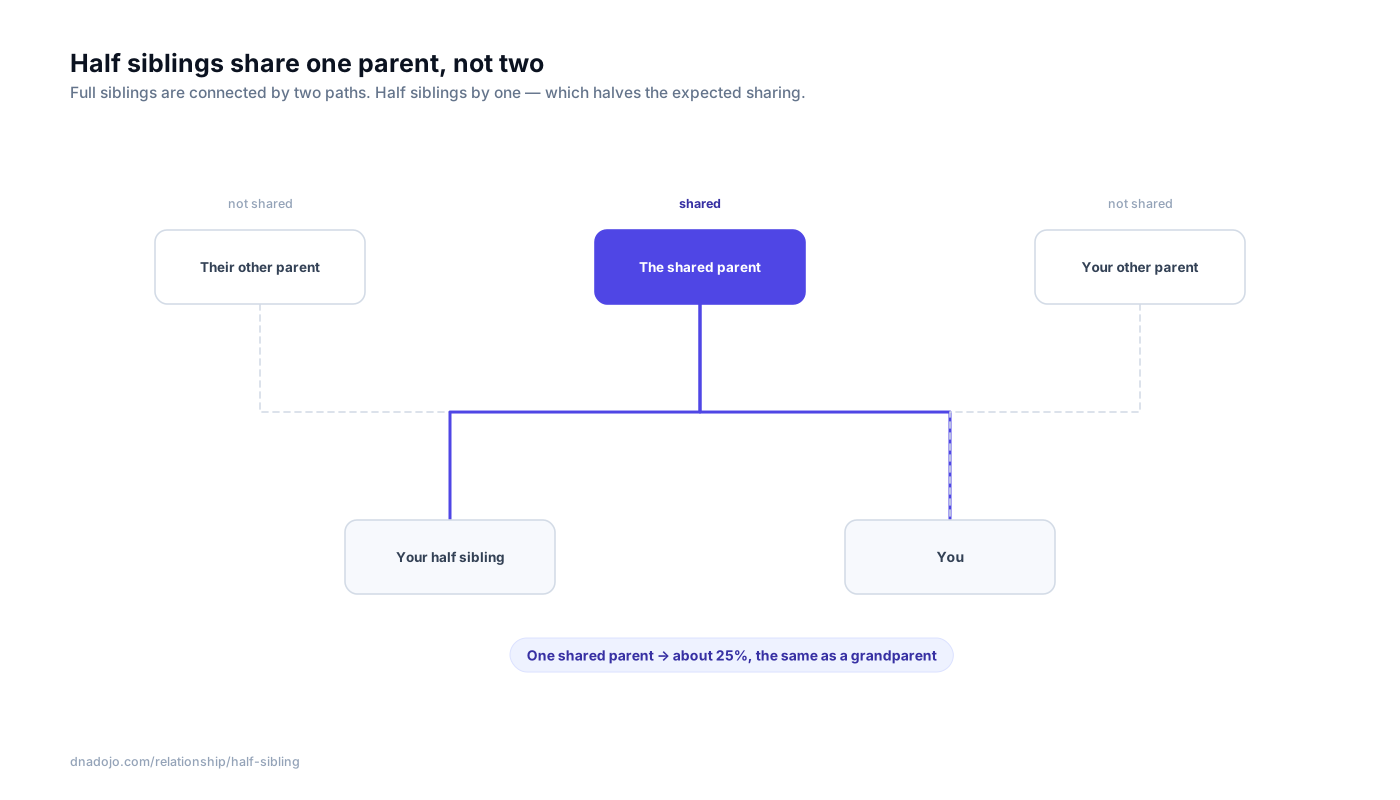
The path through the tree
- Start at the one shared parent.
- Down one generation on each side to reach the two half siblings.
- Only one path exists, instead of the two that connect full siblings.
How much DNA is shared
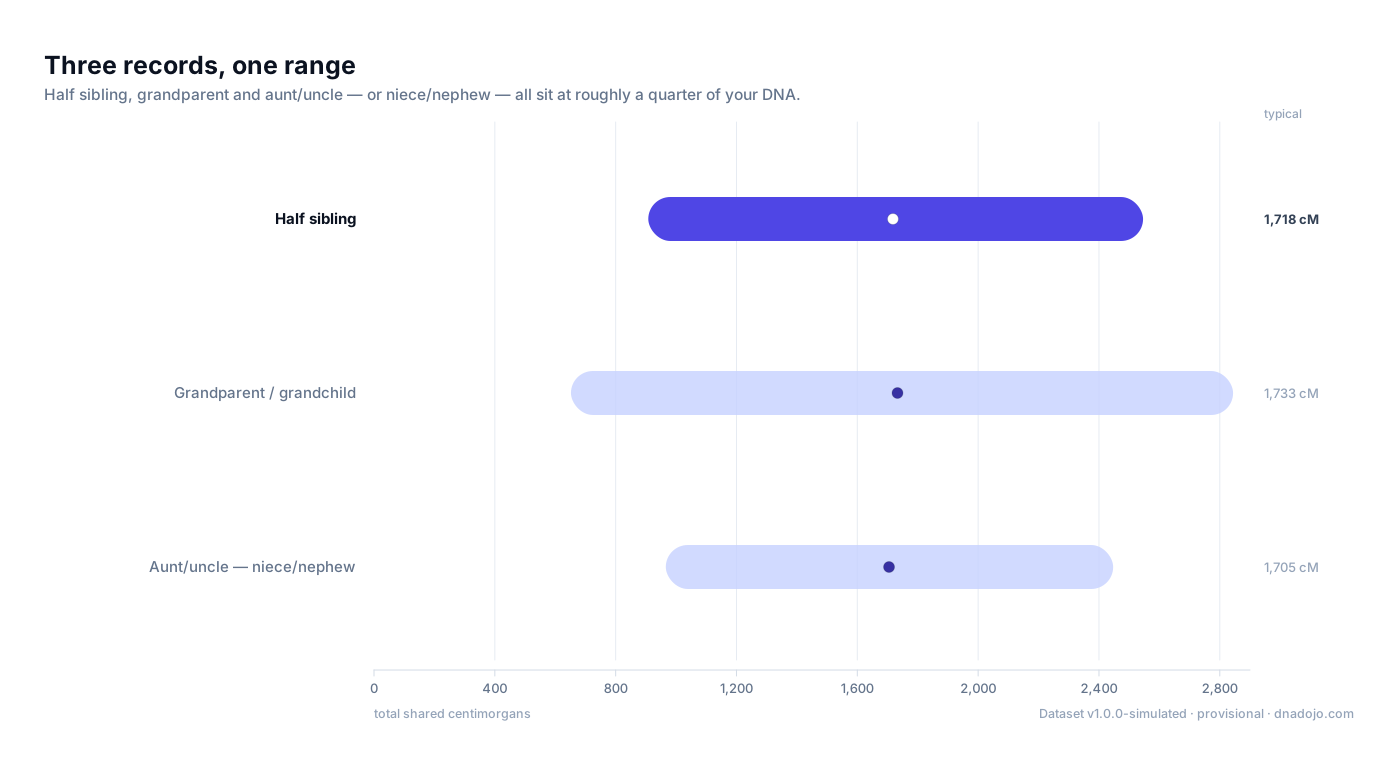
The expected share is 25.0%, which works out to around 1,718 cM. In practice the value lands somewhere in 908–2,546 cM.
Is your number consistent with half sibling?
Runs in your browser against dataset record half_sibling. Nothing is sent anywhere.
What it gets confused with
| Relationship | Why it overlaps | What breaks the tie |
|---|---|---|
| Grandparent or grandchild | Identical expected sharing at roughly 25%. | Age. A grandparent is two generations older; the DNA cannot tell you that, but a birth year can. |
| Aunt, uncle, niece or nephew | Also roughly 25%, and the range overlaps almost completely. | Shared matches. An aunt shares your parent's whole match list; a half sibling does not in the same pattern. |
| Full sibling (low end) | An unusually low full-sibling result can approach the half-sibling range. | Fully identical regions. Full siblings have them; half siblings essentially do not. |
| Double first cousin | Two sibling couples marrying produces roughly half-sibling levels of sharing. | Known family structure — check for two sibling pairs marrying in the same generation. |
By the numbers alone, these relationships in the dataset have ranges that overlap half sibling:
- Aunt/uncle — niece/nephew — 966–2,447 cM
- Grandparent / grandchild — 652–2,844 cM
- Great-grandparent / great-grandchild — 166–1,773 cM
- Full sibling — 1,916–3,154 cM
- Half aunt/uncle — half niece/nephew — 225–1,668 cM
- Great-aunt/uncle — great-niece/nephew — 259–1,728 cM
Evidence that settles it
- Fully identical regions are the single strongest signal separating full from half siblings.
- Ages settle grandparent versus half sibling almost every time.
- If a parent has tested: a half sibling matches one parent and not the other. An aunt matches one parent as a sibling.
- The X chromosome pattern can help in specific configurations, but it only ever adds evidence — it does not decide alone.
Questions
Can a half sibling and a grandparent really be told apart by DNA alone?
Not reliably from total shared cM. Both sit near 25%. Fully identical regions, X-chromosome patterns and — most practically — ages and the rest of the match list are what separate them.
What if I have discovered a half sibling I did not know about?
Take your time. A DNA result is accurate about biology and silent about circumstances, consent and everybody else's privacy. Many people find it helpful to talk to a counsellor or a support group with experience in unexpected DNA results before contacting anyone.
Do half siblings share the same amount as three-quarter siblings?
No. Three-quarter siblings — who share one parent and whose other parents were siblings — sit between half and full siblings, around 37% on average. It is rare, but it is a real option when the tree allows it.