Relationship guide
First cousin once removed: two directions, one name
A plain-English explanation of first cousin once removed, how to draw the family connection, and what DNA overlap to expect.
Updated 2026-09-13 · 6 min read · Genealogy & education only
The word removed is about generations
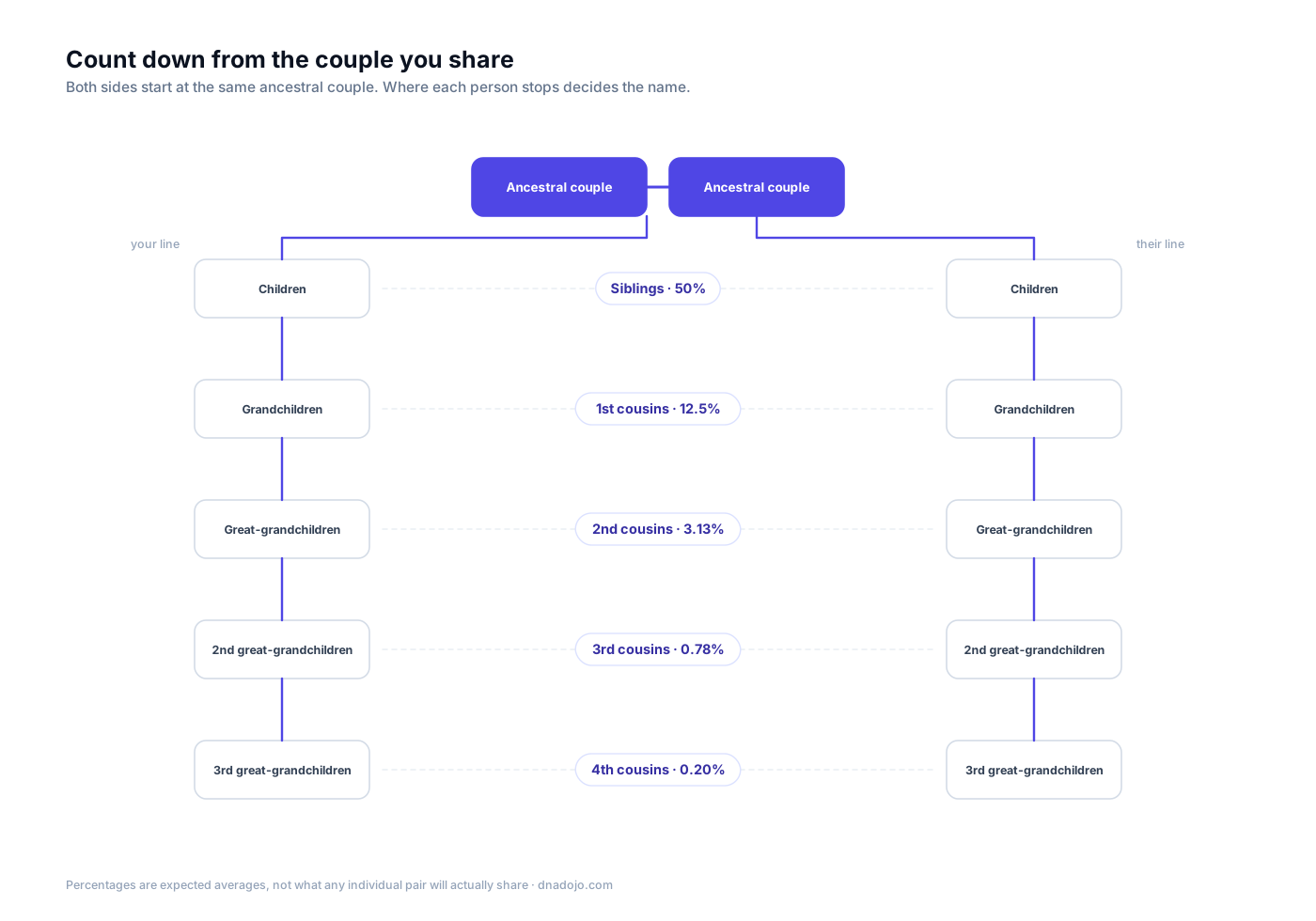
Cousin degree comes from the nearest shared ancestors. First cousins share grandparents. When one person is one generation farther from those grandparents, the relationship becomes first cousin once removed.
That produces two perfectly valid descriptions: your parent’s first cousin and your first cousin’s child. They are not different categories of cousin; they are the same tree geometry viewed from opposite ends.
DNA is a supporting clue
The cM total may overlap first cousin, second cousin, half cousins, and other removed paths. It is useful for ruling out implausible options but cannot name the relationship by itself.
Sketching the three-generation path often resolves more confusion than another calculator run. If you can identify the shared grandparents, the name follows directly.
What else could fit?
| Possibility | Why it can look similar | What to check |
|---|---|---|
| First cousin | A high 1C1R can overlap a low first cousin. | One-generation difference. |
| Second cousin | Different tree shape, similar possible cM. | Second cousins share great-grandparents. |
| Half first cousin once removed | A half relationship lowers expected sharing. | One versus two shared grandparents. |
What to do next
- Find the nearest shared ancestral couple.
- Count generations from each person to that couple.
- Use the smaller number minus one for cousin degree and the difference for removal.
Questions people ask
Is my parent’s cousin my first cousin once removed?
Yes.
Is my cousin’s child also first cousin once removed?
Yes.
How much DNA do first cousins once removed share?
The amount varies and overlaps other relationships; use it as a supporting clue.
Published September 14, 2026 · Reviewed against DNADojo dataset v1.0.0-simulated · Sources and limitations