Relationship guide
Second cousin once removed: the generational difference matters
How second cousin once removed works in both directions, how it differs from second and third cousin, and why DNA overlap is expected.
Updated 2026-09-13 · 6 min read · Genealogy & education only
First find the shared ancestors
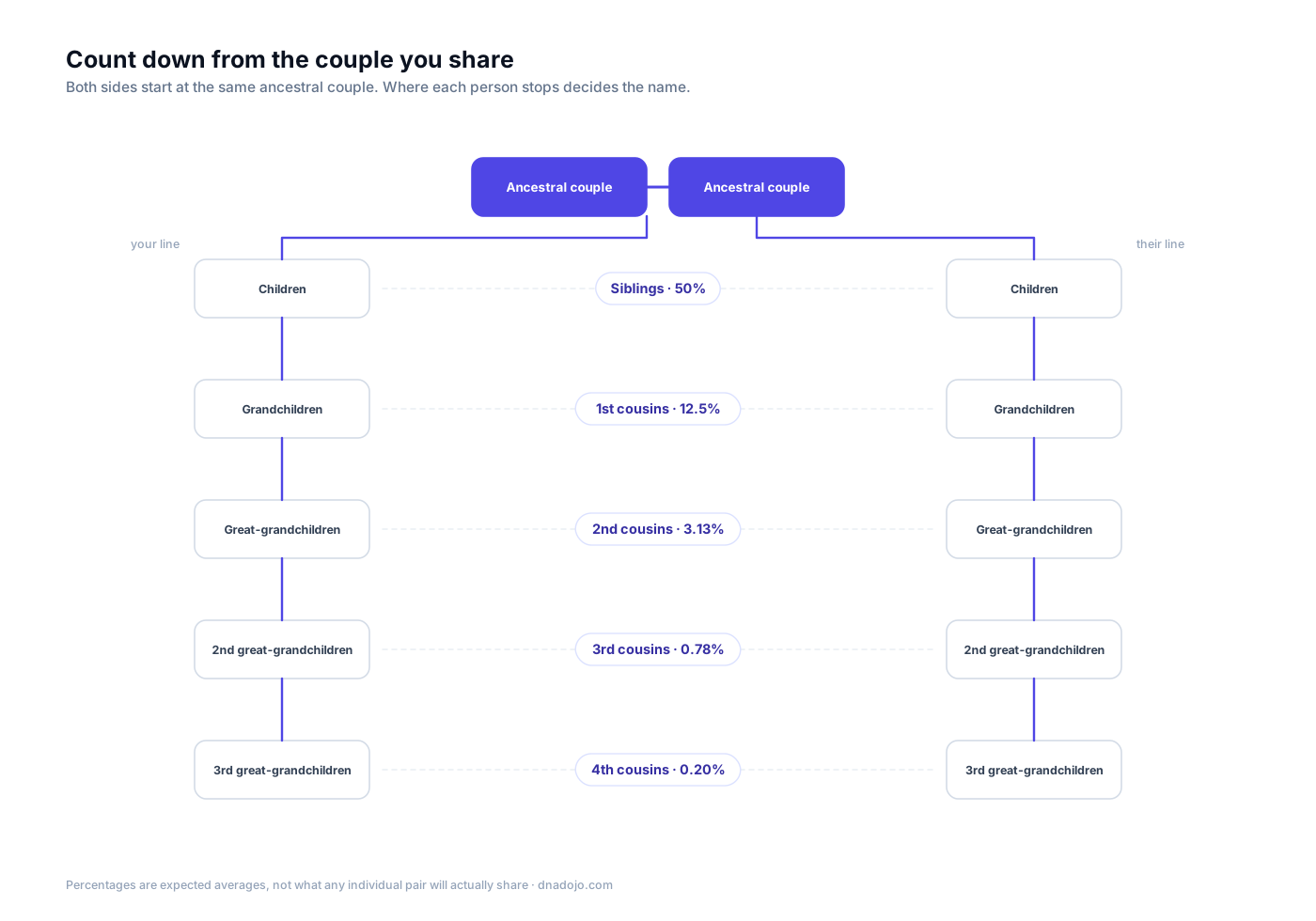
Second cousins share great-grandparents. Add one generation on either side and the relationship becomes second cousin once removed. The direction does not alter the name.
This is why cousin terms become easier when you stop memorising labels and start counting generations from the nearest shared ancestors.
The range is deliberately broad
A lower second cousin and a higher third cousin can look similar in cM. A chart helps you avoid impossible claims, but the tree does the naming.
If the connection is unknown, use shared matches to identify the ancestral branch, then count from there.
What else could fit?
| Possibility | Why it can look similar | What to check |
|---|---|---|
| Second cousin | One-generation shift produces a similar range. | Same versus different generation. |
| Third cousin | Ranges overlap at this distance. | Third cousins share second-great-grandparents. |
| First cousin twice removed | Different tree geometry can be similar genetically. | Count to nearest shared ancestors. |
What to do next
- Identify the likely great-grandparent couple.
- Count each person’s generations down from that couple.
- Use the difference to identify removal.
Questions people ask
Who is my second cousin once removed?
Your parent’s second cousin or your second cousin’s child.
Do they share great-grandparents?
The cousin relationship traces to great-grandparents, with one person a generation farther away.
Can cM name the relationship?
No. It can support a tree-based answer but does not determine it alone.
Published September 14, 2026 · Reviewed against DNADojo dataset v1.0.0-simulated · Sources and limitations