Relationship guide
Double first cousins: two cousin paths at once
Why double first cousins share more DNA than ordinary first cousins and which close relationships their totals can resemble.
Updated 2026-09-13 · 6 min read · Genealogy & education only
Two independent cousin connections
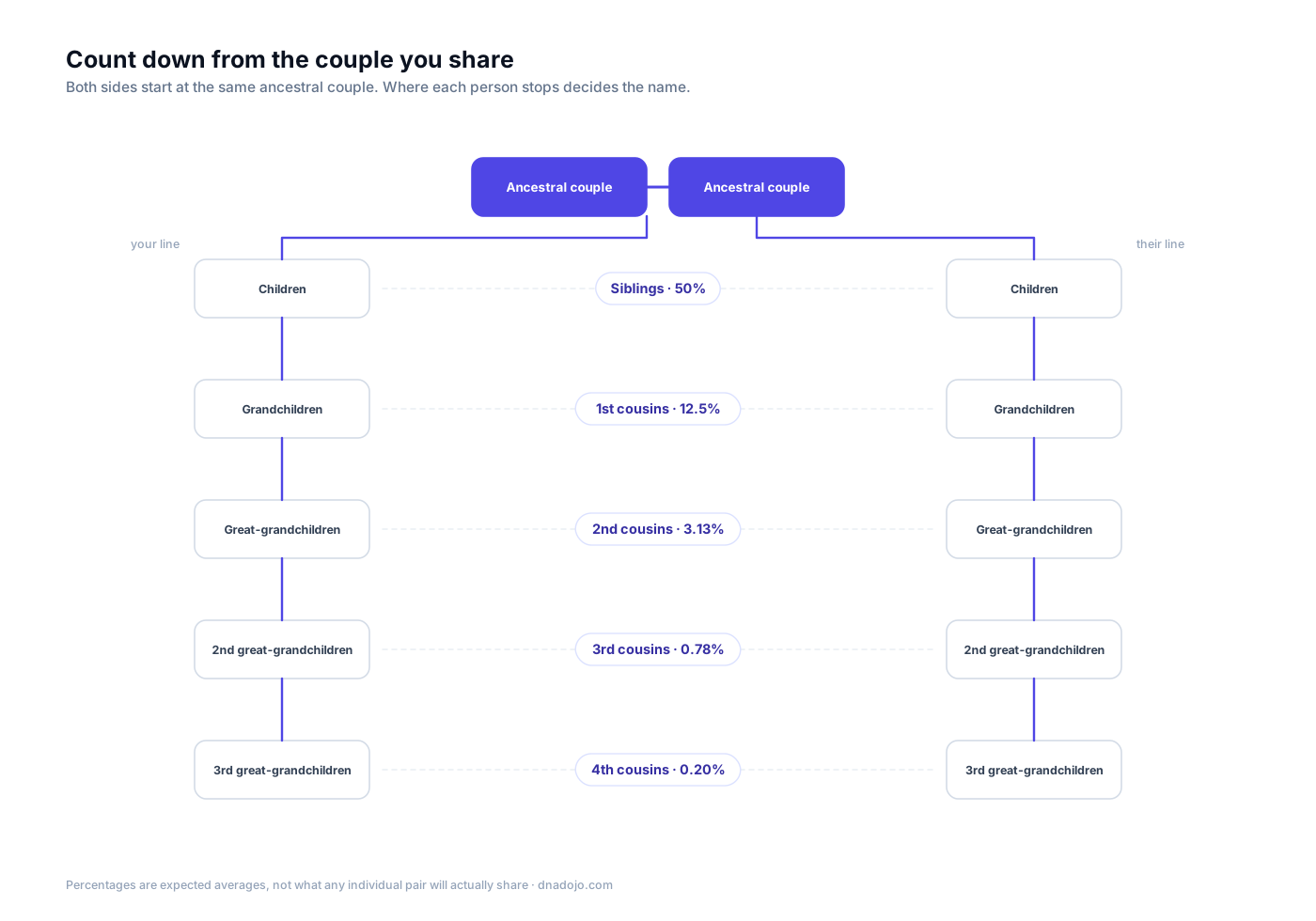
An ordinary first cousin pair shares one grandparent couple. Double first cousins share two grandparent couples because both their mothers are sisters and their fathers are brothers, or the reverse.
The result is not an error and does not automatically indicate a sibling relationship. It is an unusual but straightforward family structure.
Why the tree is essential
A double first cousin can share a total that looks startlingly close. The cM number alone may put half sibling high on a calculator list. A documented tree showing two sibling marriages explains why.
When high sharing does not fit the known tree, check for this kind of double relationship before assuming the closest possible explanation.
What else could fit?
| Possibility | Why it can look similar | What to check |
|---|---|---|
| Half sibling | Expected sharing can be similar. | Double cousins share two pairs of grandparents, not one parent. |
| Full sibling | The high end may approach sibling territory. | Fully identical regions and parental relationships. |
| First cousin | The family label sounds similar. | Double cousins have two cousin pathways, not one. |
What to do next
- Map both parents of each person.
- Look for two sibling pairs marrying across the same two families.
- Use segment data only as support for the documented structure.
Questions people ask
How much DNA do double first cousins share?
Often around the amount shared by half siblings, though individual totals vary.
Are double first cousins siblings?
No. They are cousins connected through two sibling-pair marriages.
Can a DNA site label them half siblings?
It may suggest a close relationship because the cM ranges overlap.
Published September 14, 2026 · Reviewed against DNADojo dataset v1.0.0-simulated · Sources and limitations